There’s nowhere quite like Alaska. It’s the kind of place that reshapes your sense of scale. But then what do you expect from the largest state in the United States? Every corner of this breathtaking place tells its own story: of glaciers and salmon, of Indigenous cultures who have known these lands for millennia, and of people drawn here by a need for space, quiet, and awe.
And then there’s Anchorage, Alaska’s largest city and cultural heartbeat. Wedged between the Chugach Mountains and Cook Inlet, it’s a rare city where wilderness doesn’t begin beyond the horizon but right outside your window. This is where modern Alaska and wild Alaska meet, and the results produce some fascinating curiosities.
In this blog, we share some of our favorite curious facts about Alaska, all of which provide some insight into what life is like here in the Great Land. Scroll down to get started, and if you have any questions about our guided Anchorage tours in the meantime, please just get in touch.
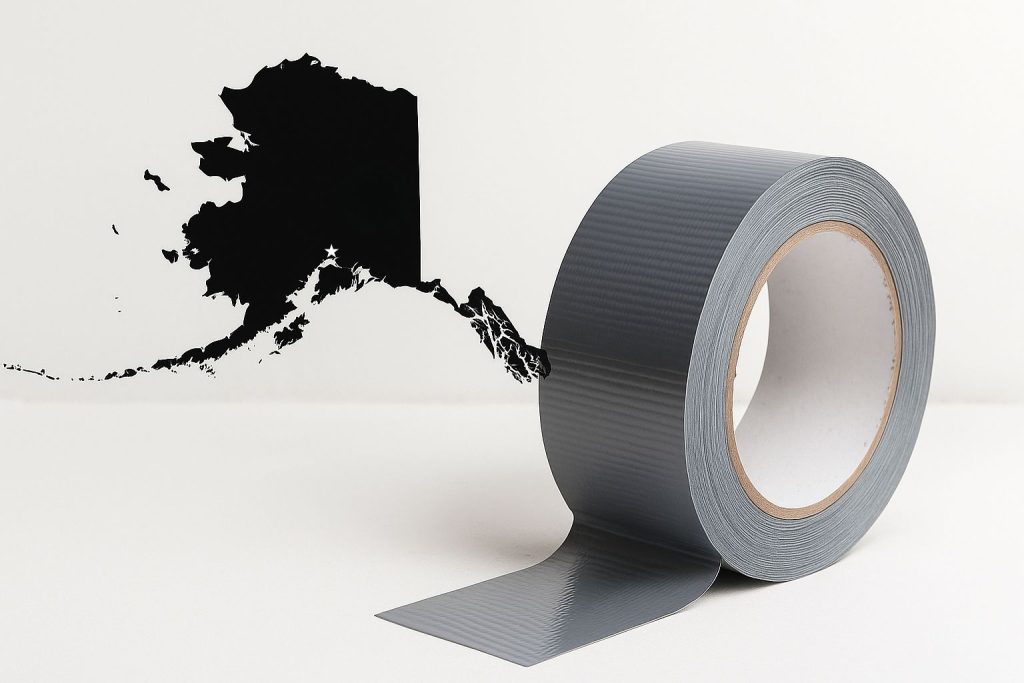
Wasilla is the Honorary Duct Tape Capital of the World
In 2002, the Duck Brand bestowed the title of “Honorary Duct Tape Capital of the World” on the city of Wasilla, north of Anchorage. But why? Well, the answer is simple — the Wasilla Walmart sells more Duck Tape Brand Duct Tape than any other Walmart store in the world!
And as you would expect from a Walmart that outsold all other Walmarts nationwide, the uses of this product are almost endless. We’ve seen everything from suits for prom made from it to people fixing planes and automobiles. Alaskans use it for everything!
The Salmon Shark is One of Alaska’s Most Formidable Ocean Predators
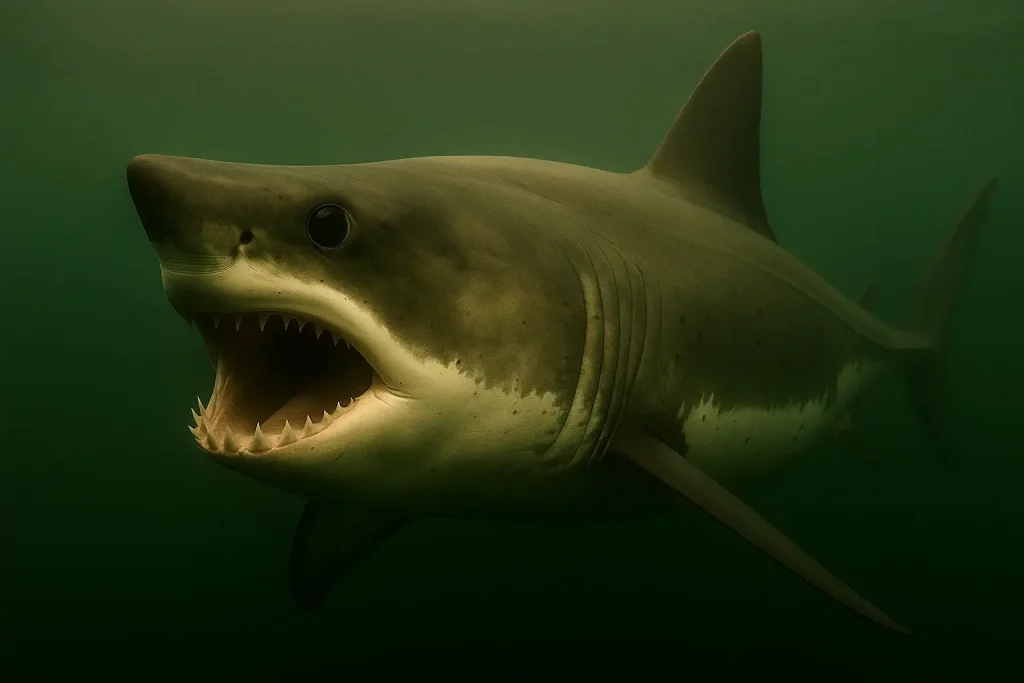
Did you know that the salmon shark is a close cousin of the great white? They frequent Alaskan waters, and the species has a reputation as one of the most feared ocean predators here. Weighing in at over 660 pounds and with a growth of up to 10 feet, salmon sharks have a wide tail with a double keel; this is unusual among sharks, but it also makes them very strong swimmers.
They have quintessential shark features, like long, sharp teeth, and a long face with seemingly black, menacing eyes, all of which make them appear especially intimidating. Salmon sharks are highly migratory but frequent waters in the Gulf of Alaska, and in particular Prince William Sound, which is a Pacific salmon fish spawning ground.
These apex predators feed on salmon, squid, sablefish, herring, walleye pollock, and a variety of other fish, as well as sea otters and marine birds. In Alaska, some fisheries consider the Salmon shark a pest as they are thought to consume from 12% to 25% of valuable salmon each year.
Alaska is Among the Most Coffee-Obsessed States in the US
Popular opinion has it that Alaska’s climate contributes to the city’s obsession with drinking coffee; that would be to warm up and get energized on those cold and dark winter days that stretch out for almost half a year. But in reality, it’s the numerous quality coffee shops, exclusive to the state, and the sense of community that sharing a hot cup of Joe gives people.
Alaska’s coffee culture even rivals that of Seattle, known as the Coffee Capital of the world and the home of the global coffee giant Starbucks. Heritage Coffee Roasting Company has been one of Alaska’s prime coffee pioneers since the early 1970s. Their products are served in over a hundred hotels, restaurants, and coffee shops across the state.
If you’re enjoying these curious facts, we think you’ll appreciate our picks for the best little-known facts about Anchorage, AK. Get to know our home city better as well as our state!

Alaska is Home to the Most Northern, Eastern, and Western Points in the US
By simply looking at a world map and zooming in on the United States, you can see that Alaska has the northernmost and westernmost points. But did you know that our state also has the easternmost point? Take a closer look, and you can observe the Aleutian Islands crossing the 180-degree meridian of longitude. This places some of the islands in the Eastern hemisphere, hence why Alaska takes the prize for the most northern, eastern, and western points in the US.
Alaskans Do NOT Eat More Ice Cream Per Capita in the Country
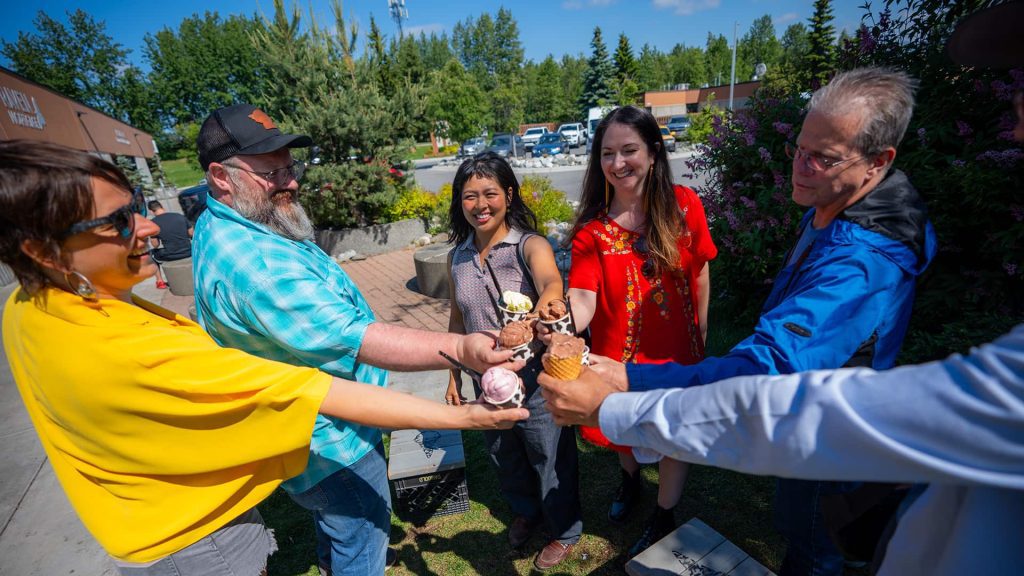
Many Alaskan tour guides will tell you we eat more ice cream per capita than any other state in the union. This is false. Contrary to what online resources indicate, Alaska is not the state that consumes the most ice cream. It is true that ice cream here is indeed very popular, and it’s common to find artisanal ice cream parlors across the state. Alaska even has its very own native version of ice cream, from thousands of years ago, known as Akutaq (see Curious Fact number 7).
However, according to a study looking at ice cream shops per 100,000 residents, Vermont loves its cool, creamy treats the most. Nonetheless, we Alaskans are deeply fond of ice cream, and we love to have it all year round, whether winter or summer.
Alaska is the Only State That Has Three Types of North American Bears
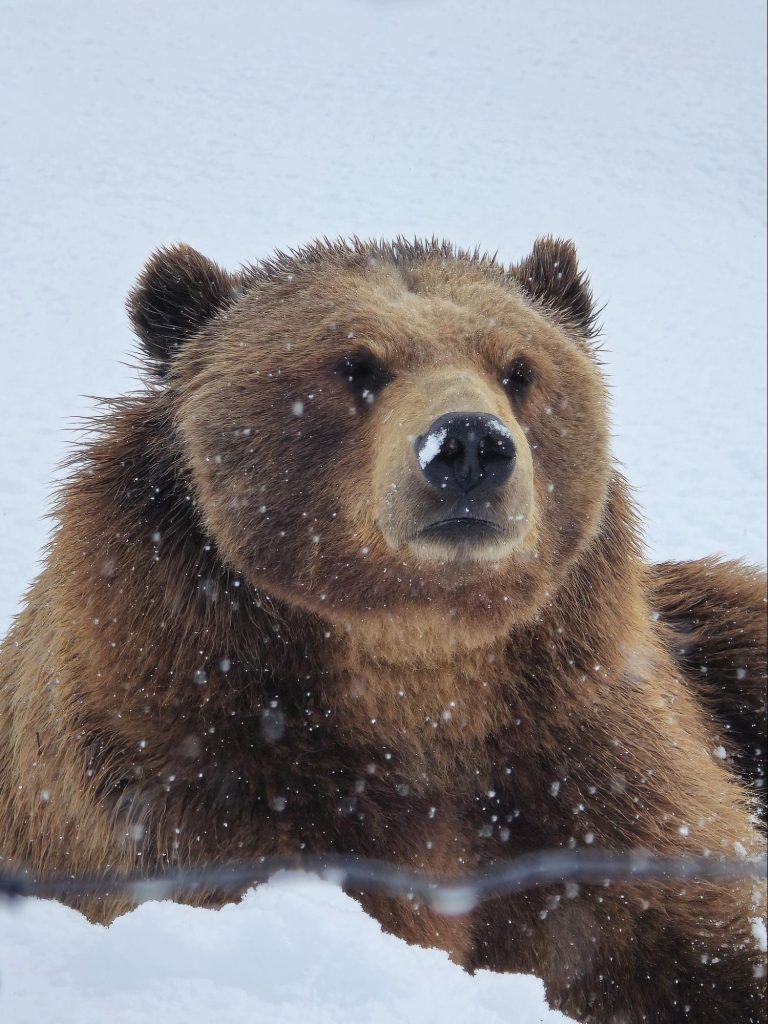
Alaska’s diverse lands and natural resources make it possible for many animal and plant species to thrive in the state. So it is no surprise that the brown, black, and polar bear all inhabit this chilly North American region. In fact, around 98% of the U.S. brown bear population lives in Alaska.
Bears are intelligent and curious carnivorous mammals, and, in most cases, are not seen as a big threat as they tend to ignore humans. But, naturally, they deserve our respect, and a safe distance should be kept when near one.
For the best tips on how to enjoy a safe bear sighting in “Bear Country”, check out the information provided by the Alaska Department of Fish & Game.
Akutaq is Alaska’s Indigenous Version of Ice Cream
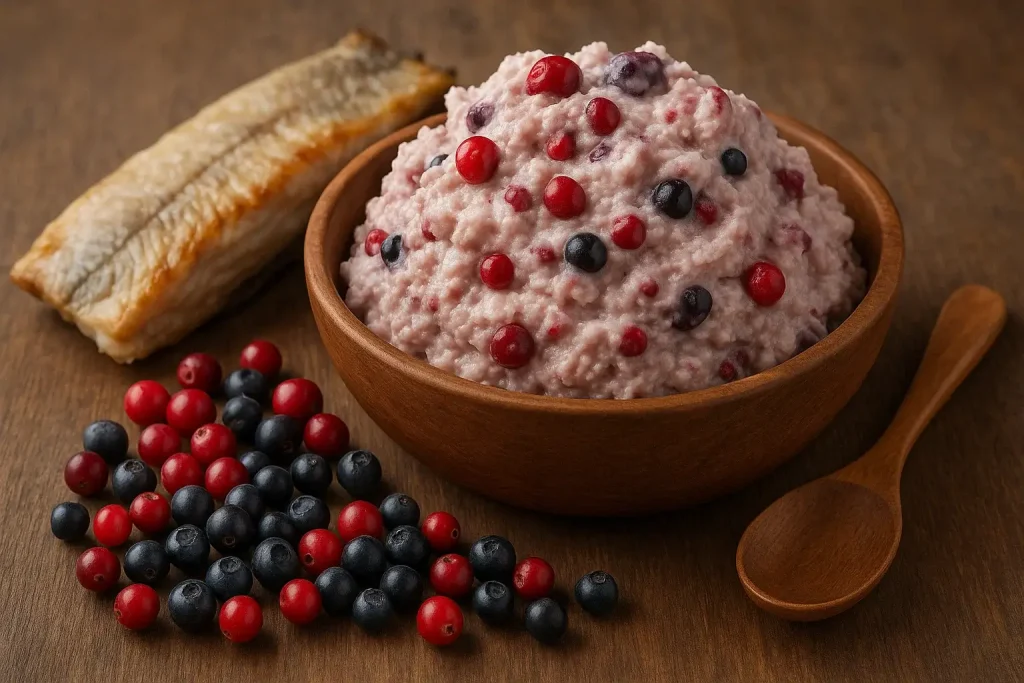
Akutaq (a-goo-duk) is a Yupik word that means to mix them together. The word is also the name for the Yupik version of ice cream. Though it has no real similarity with the commercial ice cream we buy in grocery stores nowadays, Akutaq is a dessert that has been made by Alaskan natives for thousands of years. It is still a common delicacy to this day.
Way back when, the Indigenous Yupiks of Alaska ate Akutaq for survival, and it was typically carried by hunters for nourishment during their long travels. This Alaskan fare, also referred to as ‘Eskimo ice cream’, is made primarily from animal fat or tallow, and meat from fish or dried moose.
The only similarity that it has to modern ice cream is the addition of berries, which are used to sweeten the Akutaq. The ingredients are mixed until light and fluffy, at which point the creation has a slightly closer resemblance to the frozen dessert we eat today.
We also included exploring our diverse food scene in our picks for experiences unique to Anchorage. Trying Akutaq is only the start!
The Most Deadly Animal to Humans in Alaska ISN’T Bears…
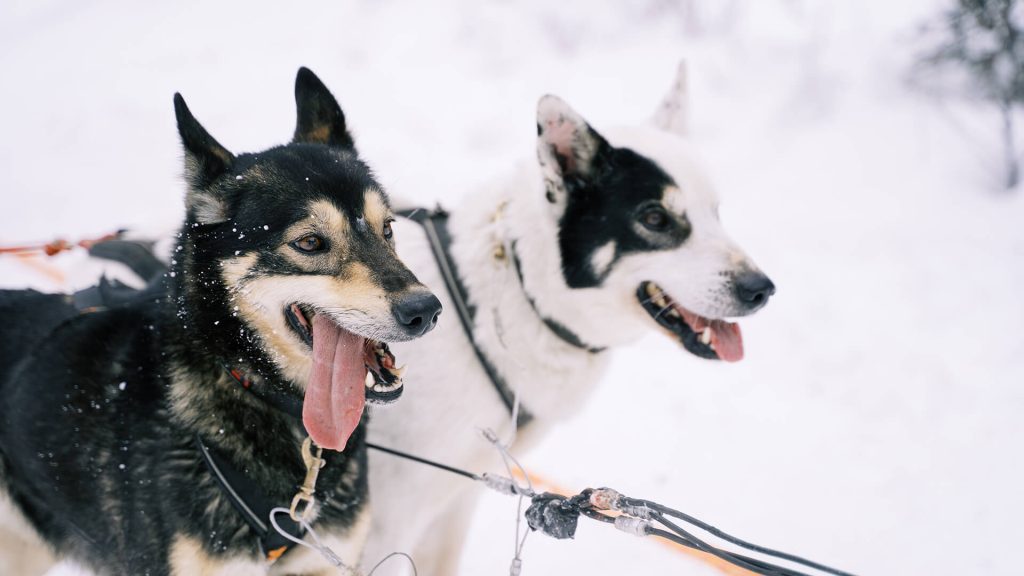
Given their size and fearsome appearance, it’s understandable why you would think bears pose the biggest threat to humans in Alaska. But the correct answer is somewhat surprising — it’s dogs!
You may find sources that list the Alaskan Malamute as one of the most dangerous dog breeds to exist. And though they are bred as heavy sledding and hunting dogs, they don’t have a reputation for attacking humans. But, as with most dog breeds, their behavior depends a lot on how they are brought up from a young age, so training them is essential. This is even truer when having them in a family home setting with other, smaller pets present.
The Alaskan Malamute has a high prey drive and is known for having the capability of hunting animals as large as polar bears. Cute as they are, these fur balls are known to show aggressive traits when they feel danger or a threat, as their natural instinct is to protect
The Last Shots Fired in the American Civil War Were Off the Shores of Alaska
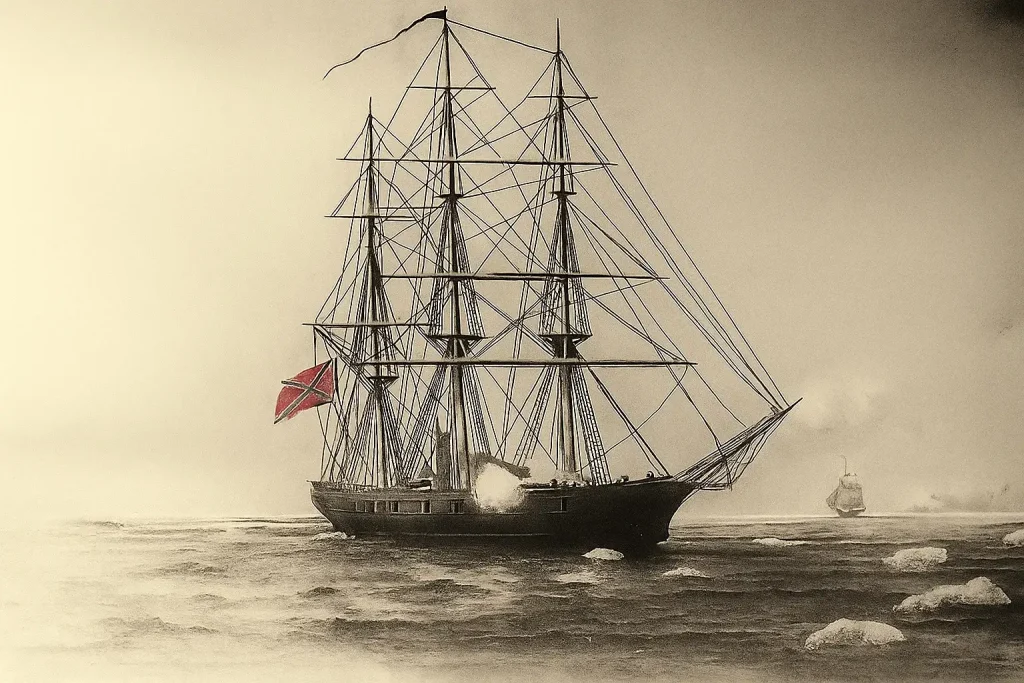
While many remember the initiation of what is considered America’s most deadly conflict, few think about the day and location where the last shots were fired. Though the Civil War officially ended on April 9th, 1865, it is believed that the last shots were fired over a month after that, on June 22nd, 1865, in the Bering Sea.
A blank was fired at a New Bedford whaling ship, which, unrelated to the war itself, in a sense, saved the gray whales that were being hunted. Records indicate that the shooter was British-born gunner John L. Guy.
The C.S.S. Shenandoah, a warship constructed in Glasgow, Scotland, was the only ship in the southern navy to circumnavigate the globe. James Bulloch, a Confederate agent in Europe, acquired the vessel by order of the Confederacy’s naval secretary Stephen Mallory.
The ship’s battle flag is preserved at the Museum of the Confederacy in Richmond, Virginia. Fascinating, right? If you’re hungry for more, take a deeper dive into the history of the C.S.S. Shenandoah.
The Odds Favor Single Ladies Looking for a Man in Alaska
Alaska is one of the few states with a higher male-to-female population ratio. But how did this come to be? It has occurred to us that perhaps the old-fashioned cliche of outdoor, tough, and rugged manual labor, such as mining, fishing, and hunting, has attracted more men than women to the state. The outdoor lifestyle is certainly a huge part of life for Alaskans.
According to recent figures, the ratio of men to women has fallen rapidly over the years, with around 110 men to every 100 women. So while the gap is closing, the chances of success are still high. But remember, while the odds are good, the goods are odd!
And if you do find love, you may appreciate our recommendations for romantic places to visit in Anchorage!
Book Your Anchorage Guided Tour with Us!
Now you know about our state, let’s start planning your time here! Join us at Alaskan Sights & Bites and have our expert local guides tell you about other quirky facts while you enjoy one of our guided Anchorage tours. Browse our range and see which one makes the best fit for you.
If you have any pre-booking questions, please don’t hesitate to contact us.